

Uncategorized
Tea for Gut Health: The Ultimate Guide to Functional Blends
There is a distinct kind of quiet that blankets a Midwest tea farm just before dawn. Here at Brook & Barre, the morning mist hangs low over the rolling green ridges, clinging gently to the delicate leaves of our Camellia sinensis plants and the vibrant rows of aromatic herbs. If you stand still enough, you can hear the soil waking up. It’s a living, breathing ecosystem beneath our boots—a complex network of microbes, fungi, and rich organic matter working in perfect harmony to nourish everything that grows above it.
Lately, we’ve been thinking a lot about that soil. Why? Because the human body operates on almost the exact same principle. Deep inside your digestive tract lies another bustling, living ecosystem: your gut microbiome. Just like our 100% organic tea farm requires rich, unadulterated soil to thrive, your inner ecosystem requires clean, intentional nourishment to keep you feeling vibrant, energized, and balanced.

In the fast-paced rush of modern life, our internal soil often gets neglected. We rush through meals, over-index on processed convenience, and swallow stress like it’s a required daily supplement. The result? A collective, metaphorical stomach ache. But wellness doesn’t have to be found in a chalky pill or an over-hyped synthetic supplement. Sometimes, the most profound healing comes from the ancient, time-tested ritual of turning over a new leaf—literally.
Welcome to the ultimate guide to nurturing your inner terrain. Today, we are diving deep into the science and storytelling behind tea for gut health, the art of crafting intentional functional tea blends, and why the fiery embrace of a thoughtfully grown ginger turmeric tea might just be the missing piece in your daily wellness ritual. Grab your favorite mug, settle into a comfortable chair, and let’s explore how farm-to-table tea can transform your health from the inside out.
Chapter 1: The Wilderness Within – Understanding Your Second Brain
To appreciate why a loose-leaf brew can have such a transformative impact on your body, we first need to take a quick, entertaining tour of your digestive tract. For decades, western medicine viewed the stomach and intestines as a relatively simple plumbing system: food goes in, nutrients get absorbed, waste goes out. Simple, right?
Not quite. Over the last twenty years, gastroenterology has experienced a massive revolution. Scientists now refer to the gut as our “second brain.” The enteric nervous system (ENS) consists of millions of neurons lining your gastrointestinal tract, communicating directly with the brain in your skull via the vagus nerve. If you’ve ever felt “butterflies” in your stomach before a big presentation, or had a “gut feeling” about a sketchy situation, that was your enteric nervous system talking.

But the real stars of the show are the microbes. Your gut is home to trillions of bacteria, viruses, and fungi. When this microscopic community is diverse and balanced, it orchestrates an incredible array of bodily functions. It produces up to 90% of your body’s serotonin (the happy chemical), regulates your immune system, tames systemic inflammation, and extracts vital vitamins from the food you eat.
When the microbiome falls out of balance—a state known as dysbiosis—the consequences echo far beyond a little bloating or indigestion. Dysbiosis can manifest as brain fog, persistent fatigue, skin flare-ups, joint discomfort, and unpredictable mood swings.
So, how do we fix it? We tend to the soil. We stop throwing synthetic chemicals at the problem and start introducing whole, organic, plant-based compounds that invite harmony back into the microbiome. And that is exactly where the magic of premium botanicals comes into play.
Chapter 2: The Farm-to-Table Disruption – Why Organic Loose Leaf Matters
Before we explore specific ingredients, we need to address the elephant in the teapot: not all tea is created equal. If your current tea experience involves buying a dusty box of mass-produced tea bags from a fluorescent-lit supermarket aisle, we have some eye-opening news for you.
Most conventional tea bags don’t contain whole tea leaves. Instead, they are filled with “fannings” and “dust”—the literal sweepings left over from mass industrial tea processing. Because these particles are so tiny and have a massive surface area exposed to the air, their essential oils, volatile compounds, and health-boosting antioxidants evaporate long before the bag ever reaches your kitchen. To make matters worse, many conventional paper tea bags are treated with epichlorohydrin (a chemical plasticizer), while modern pyramid bags are often made of synthetic plastics that release billions of microplastics into your hot water with every single steep.

Furthermore, conventional tea production relies heavily on synthetic pesticides and chemical fertilizers to force high yields out of depleted soil. Because tea leaves are never washed between harvesting and your cup, those chemical residues end up directly in your brew, dealing a direct blow to the very gut bacteria you are trying to protect.
At brookandbarrel.com, we decided to do things differently. As one of the fastest-growing American tea farms in the Midwest, we committed from day one to a 100% organic, farm-to-table model. We don’t believe in shortcuts, and we certainly don’t believe in chemical interventions.

Our loose-leaf teas are grown with a deep reverence for biodiversity. When you brew a cup of Brook & Barre tea, you are looking at whole, beautiful leaves, hand-harvested roots, and pristine botanicals that retain their structural integrity. Because our plants grow slowly in rich, natural Midwest soil, they develop a higher concentration of secondary metabolites—the exact polyphenols and antioxidants responsible for therapeutic benefits. It is tea exactly as nature intended: clean, potent, and utterly unadulterated.
Chapter 3: The Science of Tea for Gut Health
Now that we understand the importance of purity, let’s look at the fascinating biological relationship between premium botanical infusions and your microbiome. When we talk about using tea for gut health, we aren’t just leaning on folklore; we are leaning on a rapidly expanding body of peer-reviewed science.
True teas (derived from the Camellia sinensis plant, such as green, black, oolong, and white teas) are exceptionally rich in a group of antioxidants called polyphenols, specifically catechins, theaflavins, and flavonoids. Humans lack the digestive enzymes required to break down many of these complex polyphenols in the upper stomach. As a result, they travel down your digestive tract completely intact until they reach the colon.

Once they arrive in the colon, something wonderful happens. Your resident beneficial bacteria look at these polyphenols as an absolute feast. The microbes break down the polyphenols, using them as fuel to multiply and thrive. In return, this process produces short-chain fatty acids (SCFAs) like butyrate, acetate, and propionate. SCFAs are the unsung heroes of gut health; they strengthen the structural integrity of your gut lining, prevent “leaky gut” syndrome, and create a slightly acidic environment in the colon that discourages harmful pathogens from taking root.
Furthermore, premium organic tea possesses remarkable selective antimicrobial properties. Studies have shown that the natural compounds in high-quality tea can help inhibit the growth of troublesome bacteria like Helicobacter pylori (associated with stomach ulcers) and E. coli, while actively promoting the proliferation of friendly strains like Bifidobacterium and Lactobacillus.
By introducing a daily ritual of clean, organic tea into your routine, you are essentially acting as a master gardener for your inner landscape—watering the flowers and pulling the weeds with every single sip.
Chapter 4: The Alchemist’s Kettle – The Magic of Functional Tea Blends
While a pure, single-origin green or black tea is an incredible asset for your health, there is a unique power that unlocks when you venture into the world of functional tea blends.
What exactly makes a blend “functional”? In the traditional tea world, blending is often done purely for flavor or aroma—think of adding artificial bergamot oil to low-grade black tea to create an Earl Grey. In contrast, a functional blend is an intentional, synergistic marriage of premium tea leaves, medicinal herbs, adaptogens, and roots designed to support a specific physiological function in the body. It is flavor meets purpose.

Crafting these blends on our Midwest farm feels a lot like ancient alchemy mixed with modern plant biology. We look at how different plants interact with one another. In herbal medicine, there is a concept known as synergy, which posits that the therapeutic effect of a whole plant combination is significantly greater than the sum of its individual parts.
When designing functional tea blends specifically targeted at digestive wellness, we look for a few key categories of botanicals:
- Carminatives: Herbs rich in volatile essential oils that relax the smooth muscles of the digestive tract, helping to dissipate trapped gas, ease cramping, and relieve that heavy, uncomfortable fullness after meals. Examples include peppermint, fennel, and chamomile.
- Demulcents: Plants that contain high amounts of mucilage—a slippery substance that creates a soothing, protective coating over irritated or inflamed mucous membranes throughout the esophagus and stomach lining. Think marshmallow root and slippery elm.
- Bitters: Botanicals that stimulate bitter receptors on the tongue, triggering a cascade of digestive secretions, including saliva, stomach acid, bile, and pancreatic enzymes. This primes your digestive machinery to break down food efficiently.
- Anti-inflammatories: Roots and spices that target systemic and localized inflammation within the gut wall, soothing irritation and promoting cellular repair.
By carefully balancing these elements with our estate-grown organic tea leaves, we create sophisticated blends that offer comprehensive, multi-layered support for your digestive system, all while delivering an exquisite, multi-sensory flavor profile.

Chapter 5: The Golden Powerhouse – Why Ginger Turmeric Tea Rules the Gut
If there is one specific combination that stands as the undisputed monarch of digestive wellness, it is the legendary pairing of ginger and turmeric. A beautifully balanced ginger turmeric tea is a staple in holistic health traditions for good reason—it is a absolute powerhouse for a troubled stomach.
Let’s pull back the curtain on these two spectacular rhizomes (roots) and look at why they belong in your daily mug.
The Fiery Wisdom of Ginger (Zingiber officinale)
For thousands of years, across traditional Chinese medicine and Ayurveda, ginger has been revered as the ultimate remedy for the digestive system. Its magic lies primarily in a group of active pungent compounds known as gingerols and shogaols.
One of ginger’s most profound functions is its role as a natural prokinetic agent. “Prokinetic” is just a fancy medical term meaning it stimulates gastric motility. It helps your stomach empty its contents into the small intestine safely and efficiently. If you’ve ever felt like a meal was just sitting in your stomach like a heavy lead brick hours after eating, ginger is your best friend. By encouraging proper movement through the digestive tract, ginger prevents food from fermenting in the wrong places, which drastically cuts down on unwanted gas, bloating, and acid reflux.
Furthermore, ginger is world-renowned for its anti-nausea properties. It works by blocking specific serotonin receptors in the gut that trigger the vomiting reflex, making it an incredibly gentle, effective remedy for morning sickness, motion sickness, or general stress-induced nausea.

The Golden Radiance of Turmeric (Curcuma longa)
If ginger is the engine that keeps digestion moving, turmeric is the cooling balm that soothes the entire system. This brilliant orange root owes its vibrant color and medicinal fame to an active compound called curcumin.
Curcumin is one of the most thoroughly studied natural anti-inflammatory agents on the planet. In the context of gut health, chronic low-grade inflammation is often the underlying culprit behind conditions like Irritable Bowel Syndrome (IBS) and leaky gut. When the lining of your intestines becomes chronically inflamed, the tight junctions between cells begin to pull apart, allowing undigested food particles and toxins to slip into the bloodstream, triggering an immune response.
Turmeric acts directly on the cellular pathways that initiate inflammation, helping to calm irritated tissues, reduce intestinal spasms, and support the regeneration of a healthy mucosal lining. Additionally, turmeric stimulates the gallbladder to produce bile—a crucial digestive fluid necessary for emulsifying and breaking down dietary fats, ensuring you absorb fat-soluble vitamins like A, D, E, and K without sluggish discomfort.

The Ultimate Synergy
When ginger and turmeric are combined in a premium, loose-leaf organic blend, their individual benefits amplify one another exponentially. The warming, stimulating qualities of ginger perfectly balance the earthy, grounding qualities of turmeric.
At Brook & Barre, we elevate this classic combination even further. Because we cultivate our ingredients using organic, farm-to-table practices, our ginger and turmeric roots retain an incredibly high concentration of their natural volatile oils. We dry them slowly at low temperatures to lock in every ounce of potency, resulting in a brew that tastes astonishingly fresh, vibrant, and alive—miles apart from the bitter, metallic taste of conventional mass-market versions.
Chapter 6: Midwest Roots, Global Standards – The Brook & Barre Story
We are occasionally asked why we chose to build a 100% organic tea farm in the heart of the American Midwest. It’s a fair question; historically, people associate tea cultivation with the high-altitude misty mountains of Asia or East Africa.
But the Midwest possesses a unique geographical secret: some of the most fertile, nutrient-dense topsoil on earth, combined with distinct, dramatic seasonal shifts. This unique environmental stressor actually works in our favor. When plants have to adapt to hot, sun-drenched summers and deep, restorative winter freezes, they develop incredible resilience. This resilience translates directly into a higher density of phytonutrients and a deeper, more nuanced flavor profile in the cup.
Being a farm-to-table operation means we control every single step of the journey. When you order from brook and barre.com, your tea hasn’t spent six months sitting in a hot shipping container crossing an ocean, followed by another year languishing in a commercial distribution warehouse

Instead, our leaves and botanicals are grown, harvested, cured, blended, and packaged right here on our farm. We know exactly what went into the soil, exactly who picked the leaves, and exactly when the blend was sealed for freshness. It’s a transparent, hyper-local loop that ensures you receive the highest possible quality of functional tea blends available anywhere in the country.
We take our responsibility to the earth incredibly seriously. Our certified organic status isn’t just a marketing badge to us; it is a promise to preserve our local watersheds, nourish our native pollinators, and pass down a healthier, cleaner piece of land to the next generation. When you choose to support Brook & Barre, you aren’t just buying premium tea—you are actively investing in a sustainable, regenerative agricultural future right here in America.
Chapter 7: Cultivating Your Gut-Loving Tea Ritual
True wellness is rarely achieved through a single, isolated action. You can’t drink one cup of tea for gut health and expect a lifetime of digestive harmony. Instead, health is cultivated through small, intentional, daily choices that accumulate over time into a beautiful lifestyle.
Transforming your tea consumption from a casual, thoughtless habit into a mindful daily wellness ritual can have a profound impact on both your digestive system and your nervous system. Remember, because your gut and your brain are in constant communication, calming your mind is one of the most effective ways to calm your stomach.
Here is how to create a simple, therapeutic soil-to-sip ritual in your own home:

1. The Right Tools for the Craft
Ditch the restrictive, tiny metal tea balls that cramp your leaves. To get the maximum health benefits from loose-leaf organic tea, the leaves and roots need room to swim. Use a spacious glass or ceramic teapot, or a wide stainless-steel mesh infuser basket that sits directly inside your favorite mug. This allows the water to circulate freely through every fold of the leaf, extracting the full spectrum of polyphenols and essential oils.
2. Mind the Temperature
Water temperature matters immensely. If you pour boiling water directly over delicate green tea leaves, you will scorch them, releasing an excess of bitter tannins and destroying sensitive antioxidants.
- For green tea-based functional blends, aim for around 175°F to 180°F (just before boiling).
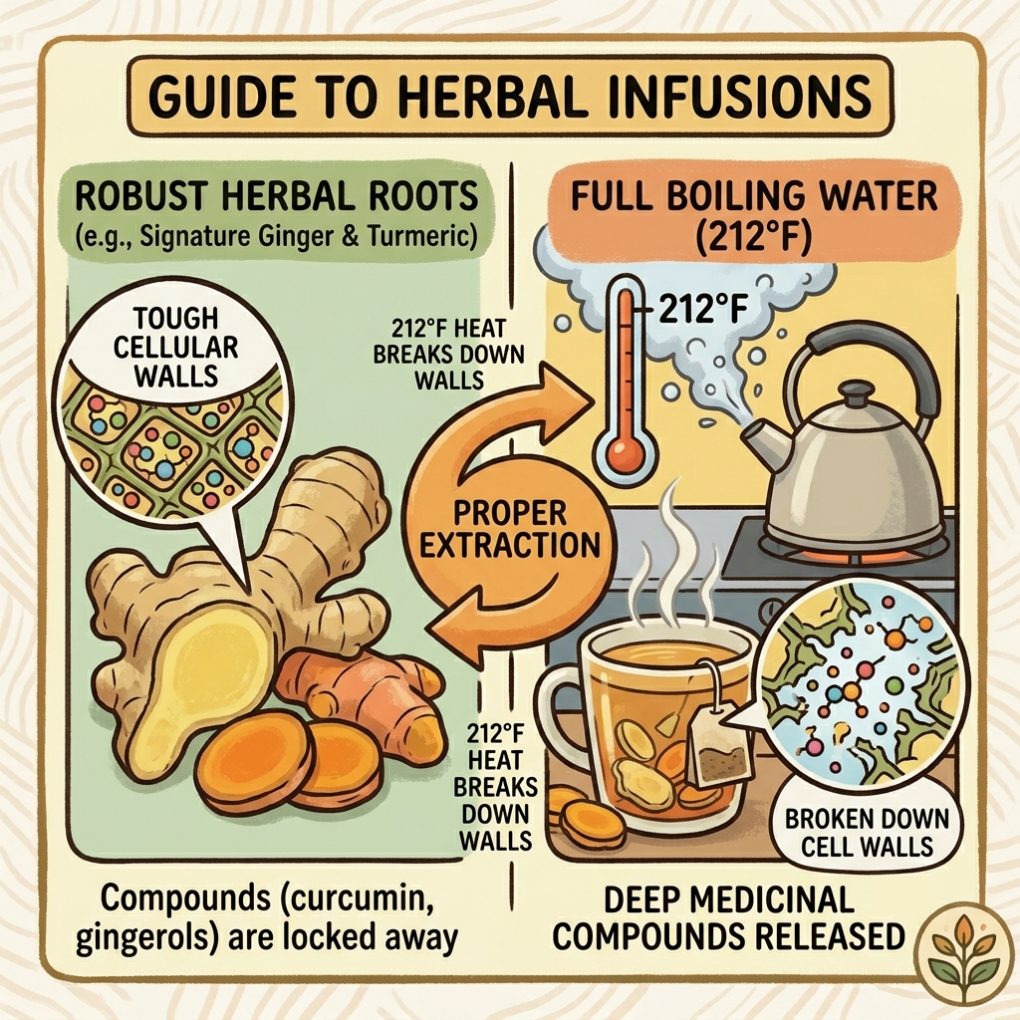
- For robust herbal infusions and roots, like our signature ginger turmeric tea, use fully boiling water (212°F) to properly break down the tough cellular walls of the roots and draw out their deep medicinal compounds.
3. The Art of the Covered Steep
This is a crucial, often overlooked secret of herbal medicine: always cover your mug or teapot while it is steeping! The incredible aromas that fill the room when you brew tea are actually volatile essential oils escaping into the air. By placing a small lid or saucer over your mug, you force those therapeutic oils to condense on the underside of the lid and drip right back down into your brew, ensuring all that healing power stays exactly where it belongs—in your cup. Keep roots steeping for at least 10 to 15 minutes to unlock their full potential.
4. Engage Your Senses
As your tea steeps, don’t reach for your smartphone or check your email. Take those five to ten minutes as a sanctuary of silence. Watch the leaves unfurl and dance in the hot water. Notice the color shifting from crystal clear to a deep amber or a glowing, radiant gold. Wrap your hands around the warm ceramic of your mug and feel the heat radiating into your palms. Take a deep, slow breath through your nose, inhaling the grounding, spicy aroma of fresh ginger, the earthy warmth of turmeric, and the clean crispness of organic tea leaves.
By engaging your senses, you signal to your central nervous system that you are safe, calm, and protected. This shifts your body out of sympathetic mode (“fight or flight”) and into parasympathetic mode (“rest and digest”). When your body is relaxed, blood flow returns to your digestive organs, stomach acid production normalizes, and your gut can do its job beautifully.

Chapter 8: Frequently Asked Questions About Tea and Digestion
To help you navigate your journey toward optimal digestive wellness, we’ve compiled some of the most common questions we hear from visitors to our Midwest farm and customers at brook and barre.com.
Can I drink ginger turmeric tea every single day?
Absolutely! In fact, consistency is key when it comes to botanical wellness. Drinking a high-quality, organic blend daily allows the anti-inflammatory compounds to build up in your system, providing ongoing, preventative support for your gut lining. Many of our customers love enjoying a warm mug first thing in the morning to gently wake up their digestive system, or about thirty minutes after their largest meal of the day to prevent post-dinner bloating.
Will tea cure chronic digestive conditions like IBS or Leaky Gut?
While high-quality organic tea is a phenomenal, evidence-based tool to support, soothe, and optimize your digestive health, it should be viewed as one piece of a holistic wellness puzzle. True healing requires a comprehensive approach that includes a nutrient-dense whole-food diet, stress management, quality sleep, and working alongside a qualified healthcare practitioner. However, introducing clean, polyphenol-rich functional tea blends into your routine provides an exceptional foundation for cellular repair and microbiome diversity.
Why is loose-leaf tea considered better for the environment?
Traditional tea bags, even paper ones, frequently use synthetic fibers or plastic sealants to keep the bag closed, meaning they do not break down fully in your backyard compost bin and can leave microplastics in the soil. Furthermore, the massive industrial processing, bleaching, and packaging required for individual tea bags create a significant carbon footprint. Loose-leaf tea from Brook & Barre is entirely plant-based and minimally processed. Once you are finished brewing, the spent leaves and roots can go directly into your garden or compost pile, returning their nutrients straight back to the earth in a perfect, zero-waste loop.

Conclusion: An Invitation to Turn Over a New Leaf
At the end of the day, wellness isn’t about rigid perfection or punishing health trends. It is about listening closely to that quiet voice inside you—that gut feeling—and choosing to honor it with kindness, patience, and the purest nourishment available.
Here at Brook & Barrel, we put our hearts, our hands, and our deep love for the land into every single seed we plant, every leaf we harvest, and every blend we curate. We don’t just want to sell you tea; we want to invite you into a slower, more intentional way of living. We want to welcome you to a community that values quality over speed, transparency over clever marketing, and the ancient, undisputed wisdom of Mother Nature.

Whether you are looking to soothe a chronically stubborn stomach, diversify your microbiome with clean tea for gut health, explore the intentional world of artisan functional tea blends, or wrap yourself in the cozy, golden warmth of our handcrafted ginger turmeric tea, we invite you to explore the farm-to-table difference.
Your inner terrain deserves the very best soil. Head over to our online farm stand at brook and barre.com to find the perfect loose-leaf blend for your wellness journey. From our Midwest fields straight to your favorite mug, we wish you happy steeping, peaceful minds, and a deeply happy, thriving gut. Cheers to your health!
Ready to make a change for your gut health?
Try Our Tea Today!
